

Digital Nomad Croatia
Croatia has become one of the most popular destinations in Europe for digital nomads and remote workers. A Mediterranean climate, affordable cost of living compared to Western Europe, EU membership, and a legal framework specifically designed for remote workers have made Croatia a serious option for anyone looking to work from somewhere new. Whether you are considering Zagreb for its year-round urban energy, Split for its Adriatic setting, or Zadar for its growing remote-work community, this guide covers what you need to know before you arrive — including the legal steps that most guides overlook.
Croatia introduced a dedicated temporary stay permit for digital nomads in 2021, and the framework has been updated since to become more attractive. This guide explains who qualifies, what documents are required, how to apply, what the tax position looks like, and what legal steps every digital nomad in Croatia should take from day one.
The Croatian Digital Nomad Permit: Who Can Apply
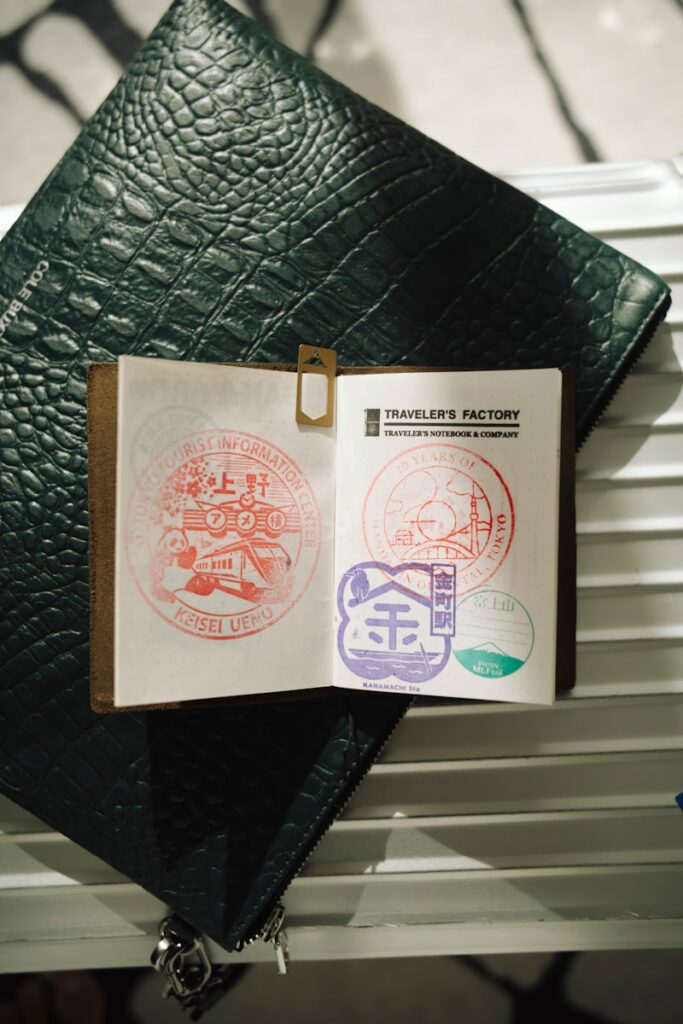
Croatia’s digital nomad permit is a temporary stay permit — not a traditional visa — and it is available only to third-country nationals: citizens of countries outside the European Union and the European Economic Area. EU and EEA citizens already have the right to live and work in Croatia freely under EU free movement rules and do not need a separate permit, though they do need to register their residence and take certain administrative steps.
The Core Eligibility Condition
To qualify, you must be employed by or working for a company or clients that are not registered in Croatia, and you must not perform work or provide services to employers or clients based in Croatia. This is a hard requirement. If you take on any work for a Croatian client — even a single project — you fall outside the scope of the permit and would need a different type of residence or work authorisation. The permit is designed for those whose income comes entirely from abroad.
Income Requirements
Applicants must demonstrate sufficient income to support themselves during their stay in Croatia. As of 2025, the minimum income threshold is €3,295 per month, evidenced by six months of bank statements or payslips. If you are bringing a spouse, unmarried partner, or minor children, the required income increases by 10% per accompanying family member.
As an alternative to demonstrating monthly income, applicants can show sufficient savings: at least €39,540 for a planned stay of up to 12 months, or at least €59,310 for an 18-month stay. The savings must be documented with bank statements covering the relevant period.
Permit Duration and Renewal
The Croatian digital nomad permit is issued for up to 18 months — extended from the original 12-month maximum in 2025. It cannot be renewed in Croatia directly: once the 18 months expire, you must spend at least six months outside Croatia before you can apply again. During the permit period, you are free to travel within the Schengen area, though Croatia’s specific Schengen arrangements should be checked depending on your nationality.
Documents Required for the Croatian Digital Nomad Permit
Gathering the required documents is the step where many applications run into problems. The list is specific and the formal requirements — apostilles, certified translations, document validity periods — are strictly applied.
- Valid passport — must remain valid for at least three months beyond the end of your intended stay, plus two passport-size photographs
- Completed application form for temporary stay (available from the Croatian Ministry of the Interior)
- Proof of income — six months of bank statements or payslips demonstrating the minimum monthly income threshold
- Proof of remote work — an employment contract with a foreign employer, or contracts and invoices demonstrating work for foreign clients
- Criminal record certificate from your home country and from any country where you have lived for more than one year immediately before the application — this must be apostilled and translated into Croatian by a certified court interpreter
- Proof of accommodation in Croatia — a lease agreement or, if you own property, a title deed; a specific Croatian address is required at the time of application
- Health insurance valid for the entire duration of the intended stay in Croatia
The criminal record requirement catches many applicants off guard. If you have lived in more than one country in the past year, you need a clean criminal record certificate from each of those countries — not just your country of citizenship. Each certificate must be apostilled and translated into Croatian. This process can take several weeks depending on the country involved, so it should be started early.
How to Apply: Step by Step
Applying from Outside Croatia
If you are not yet in Croatia, the application is submitted to the Croatian embassy or consulate in your country of residence. You submit all required documents, attend an interview if requested, and wait for the decision. If approved, you receive confirmation that allows you to enter Croatia and collect your biometric residence card.
Applying from Within Croatia
If you are already in Croatia on a valid short-stay visa or visa-free entry, you can apply at the police station (policijska uprava) responsible for the area where you intend to reside. You will need to have a Croatian address confirmed before submitting the application, which means signing a lease before you apply.
Once the permit is approved, you must register your temporary Croatian address at the local police station within three days of arrival or approval, by submitting form Obrazac 8a together with your lease agreement or booking confirmation. You then return to collect your biometric residence card.
Best Cities in Croatia for Digital Nomads
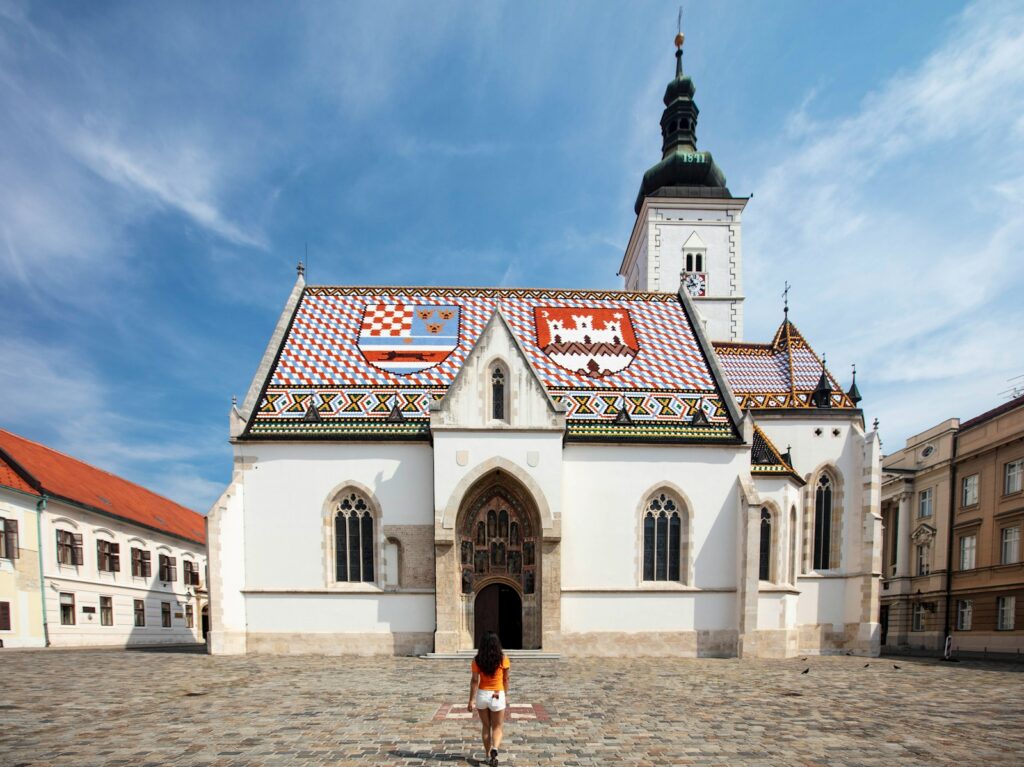
Croatia offers several distinct options for digital nomads, each with a different character. Your choice will depend on whether you prioritise year-round urban infrastructure, coastal lifestyle, community, or cost.
Zagreb
Zagreb is the capital and the most practical base for digital nomads who want consistency. It has the highest concentration of coworking spaces in Croatia, reliable high-speed internet across most of the city, well-developed public transport, and a lively café and restaurant scene that makes working from non-office spaces easy. The international community in Zagreb is larger and more established than in other Croatian cities, which matters for those who want to connect with other remote workers.
Zagreb is also the most affordable of the major Croatian cities for long-term accommodation, and it functions well year-round — unlike the coastal cities, it does not fluctuate between overcrowded summer tourist seasons and quiet winters. For those dealing with legal and administrative formalities — permit applications, OIB registration, lease reviews — Zagreb offers the most accessible infrastructure, including the largest number of English-speaking professionals and institutions.
Split
Split is Croatia’s second city and a major hub on the Dalmatian coast. It offers a compelling combination of historic architecture, proximity to the islands, and a growing digital nomad community. The best months for digital nomads in Split are spring and autumn — the shoulder seasons — when the city is liveable and beautiful without the extreme summer tourist pressure that makes accommodation expensive and the old town uncomfortably crowded.
Split has developed its coworking infrastructure significantly in recent years and has good transport connections, including an international airport and ferry routes to the islands and Italy. Accommodation costs are higher than Zagreb, particularly during the tourist season.
Zadar
Zadar has positioned itself deliberately as a digital nomad destination through the Digital Nomad Valley of Zadar initiative — a community designed to bring remote workers together and support them with local connections, events, and resources. It is smaller than Zagreb and Split, which makes the community feel more concentrated, and it is generally more affordable than Split for longer stays.
Zadar has an international airport with direct connections to several European cities, and its old town peninsula — compact, walkable, and overlooking the Adriatic — provides an exceptional quality of life for those who do not need the scale of Zagreb.
Dubrovnik
Dubrovnik is Croatia’s most internationally recognisable city and one of the most beautiful urban environments in Europe. For digital nomads, the reality is more nuanced: accommodation is significantly more expensive than anywhere else in Croatia, the summer tourist crowds are intense, and the city’s compact geography can feel limiting for longer stays. The spring and autumn months are when Dubrovnik works best as a base. Those who can manage the costs will find excellent connectivity, a scenic setting, and a functioning international community. It is a more realistic option for shorter stays within a longer Croatian itinerary rather than as a primary base.
Rijeka
Rijeka is Croatia’s largest port city and the least tourism-oriented of the major cities, which is precisely what makes it appealing to digital nomads looking for a quieter, more local experience at a lower cost. It has a distinct character — influenced by its history at the intersection of Italian and Croatian culture — and provides easy access to the Kvarner islands and the Istrian peninsula. Coworking infrastructure is more limited than in Zagreb or Split, but it is growing, and the lower cost of accommodation makes it an increasingly attractive option for longer stays.
Planning a Move to Croatia as a Digital Nomad?
Kontić Legal assists digital nomads and remote workers with the legal and administrative steps of setting up life in Croatia — from OIB registration and lease review to permit support and property purchase if you decide to stay longer. Contact us to discuss your situation.

Legal Steps Every Digital Nomad in Croatia Should Take
Most digital nomad guides focus on the permit application and stop there. In practice, the permit is only the first step. Once you are living in Croatia, a number of legal and administrative tasks follow — and handling them correctly from the start avoids complications later.
Obtaining Your OIB
The OIB (osobni identifikacijski broj) is Croatia’s personal identification number, and you will need one for almost everything: opening a bank account, signing a lease, registering utilities, and dealing with any Croatian public authority. While the digital nomad permit application itself does not require an OIB, you will quickly find that daily life in Croatia is difficult without one.
The OIB can be obtained through the Croatian Tax Administration, either in person at a local office or through a Croatian embassy or consulate abroad before you arrive. The process requires your passport and proof of your connection to Croatia — in the case of digital nomads, the permit application or approval is typically sufficient. For a full explanation of the process, see our guide on how to get an OIB in Croatia as a foreigner.
Registering Your Address
Once you have a Croatian address, you are required by law to register it with the local police station. For digital nomad permit holders, this must be done by submitting a dedicated form along with your lease agreement. Address registration is not optional — it is a legal requirement, and it is what triggers issuance of the biometric residence card.
Reviewing Your Lease Agreement
Croatian residential lease agreements can vary significantly in quality and content. Some landlords — particularly those renting to foreigners — use agreements that are unbalanced, incomplete, or that contain provisions that would be unenforceable or disadvantageous under Croatian law. Having a Croatian lawyer review your lease before you sign ensures that the key terms are clearly defined: rent amount and payment terms, the deposit and conditions for its return, early termination provisions, utilities, and the landlord’s maintenance obligations.
For digital nomads signing leases that will form part of their permit application, the lease must also meet the formal requirements set by the Croatian Ministry of the Interior. A lawyer can confirm that it does before you submit your application.
If You Decide to Buy Property
A significant number of digital nomads who spend time in Croatia find themselves considering property purchase — either as a long-term base or as an investment. Croatia allows citizens of most countries to buy residential property, and the legal process is straightforward with the right assistance. For a detailed guide to the purchase process, see our post on buying property in Croatia as a foreigner and our step-by-step guide to the Croatian property purchase process.
Need Legal Help Setting Up in Croatia?
From OIB registration and lease review to permit support and property purchase, Kontić Legal provides English-language legal assistance to digital nomads and foreign nationals living in or moving to Croatia. Contact us to find out how we can help.
Frequently Asked Questions: Digital Nomads in Croatia
I am an EU citizen. Do I need the digital nomad permit to live in Croatia?
No. EU and EEA citizens have the right to live and work in Croatia freely under EU free movement rules. You do not need a separate digital nomad permit. You will, however, need to register your residence if you plan to stay for more than three months, and you will need an OIB for most administrative and financial tasks. A Croatian lawyer can advise you on the registration steps applicable to your situation.
Can I work for Croatian clients while on the digital nomad permit?
No. The digital nomad permit requires that your work be performed exclusively for employers or clients that are not registered in Croatia. If you provide services to a Croatian client — even a single project — you fall outside the scope of the permit. In that case, you would need a different type of residence or work authorisation. If you are considering taking on Croatian clients alongside your foreign work, legal advice before doing so is strongly recommended.
Do I need to pay tax in Croatia on my remote work income?
Income earned from foreign employers or clients is exempt from Croatian personal income tax for digital nomad permit holders unde the Croatian Personal Income Tax Act. This means Croatia does not tax your remote work earnings during the permit period. However, your home country’s tax rules may still apply depending on your tax residency status and any applicable double taxation treaty. The interaction between Croatian and home-country tax rules depends on your specific nationality and circumstances and is worth reviewing before you arrive.
Can I bring my family on the digital nomad permit?
Yes. A spouse or unmarried partner and minor children can join you in Croatia under the digital nomad permit framework. Each accompanying family member increases the required minimum monthly income by 10%. Family members will need their own documentation and will need to register their residence separately. A Croatian lawyer can advise on the specific requirements for family reunification under the digital nomad permit.
Why do I need an OIB as a digital nomad in Croatia?
The OIB is Croatia’s personal identification number and is required for most administrative and financial transactions: opening a bank account, signing a lease, registering utilities, and dealing with any Croatian public authority. While the permit application itself does not require an OIB, life in Croatia without one is significantly more complicated.
How long does the application process take?
Processing times vary depending on where you apply and the workload of the relevant authority. Applications submitted at Croatian embassies or consulates can take several weeks. Applications submitted at a police station in Croatia while on a valid short-stay entry can sometimes be processed faster, though this also varies. Gathering the required documents — particularly apostilled criminal records from multiple countries — is often the most time-consuming step and should be started well in advance of your planned move.
Can I renew the digital nomad permit in Croatia?
The permit cannot be renewed without first leaving Croatia. Once your 18-month permit expires, you must spend at least six months outside Croatia before applying again. If you are planning a longer-term stay in Croatia after the permit period, there are other residence options that may be available depending on your circumstances — for example, if you establish a business in Croatia. A Croatian lawyer can advise on the options applicable to your specific situation.
Which city in Croatia is best for digital nomads?
Zagreb is the best year-round base for most digital nomads: the most coworking spaces, the most stable infrastructure, the most affordable long-term accommodation among the major cities, and the largest international community. Split and Zadar are excellent choices for those who prioritise the Adriatic setting, particularly in spring and autumn. Zadar has a specific digital nomad community initiative (Digital Nomad Valley of Zadar) that makes it particularly welcoming. Dubrovnik and Rijeka are worth considering for shorter stays or as part of a broader Croatian itinerary.
How Kontić Legal Can Help
Kontić Legal provides English-language legal services to foreign nationals living in or relocating to Croatia, including digital nomads and remote workers. We assist with the practical legal and administrative steps that arise from the moment you decide to make Croatia your base.
We help digital nomads obtain their OIB, review residential lease agreements before signing, and advise on the formal requirements that rental contracts must meet for permit applications. For those going through the permit process, we can advise on document requirements, review your file before submission, and assist with any issues that arise during the application.
For digital nomads who decide to put down deeper roots — whether by purchasing a property in Croatia or establishing a business presence here — we handle the full legal process. For more information about buying property in Croatia as a foreign national, see our guide to buying property in Croatia as a foreigner. To discuss your specific situation, use the contact form below.